



NEXT GENERATION LEADERS • SUSTAINABLE DEVELOPMENT GOALS
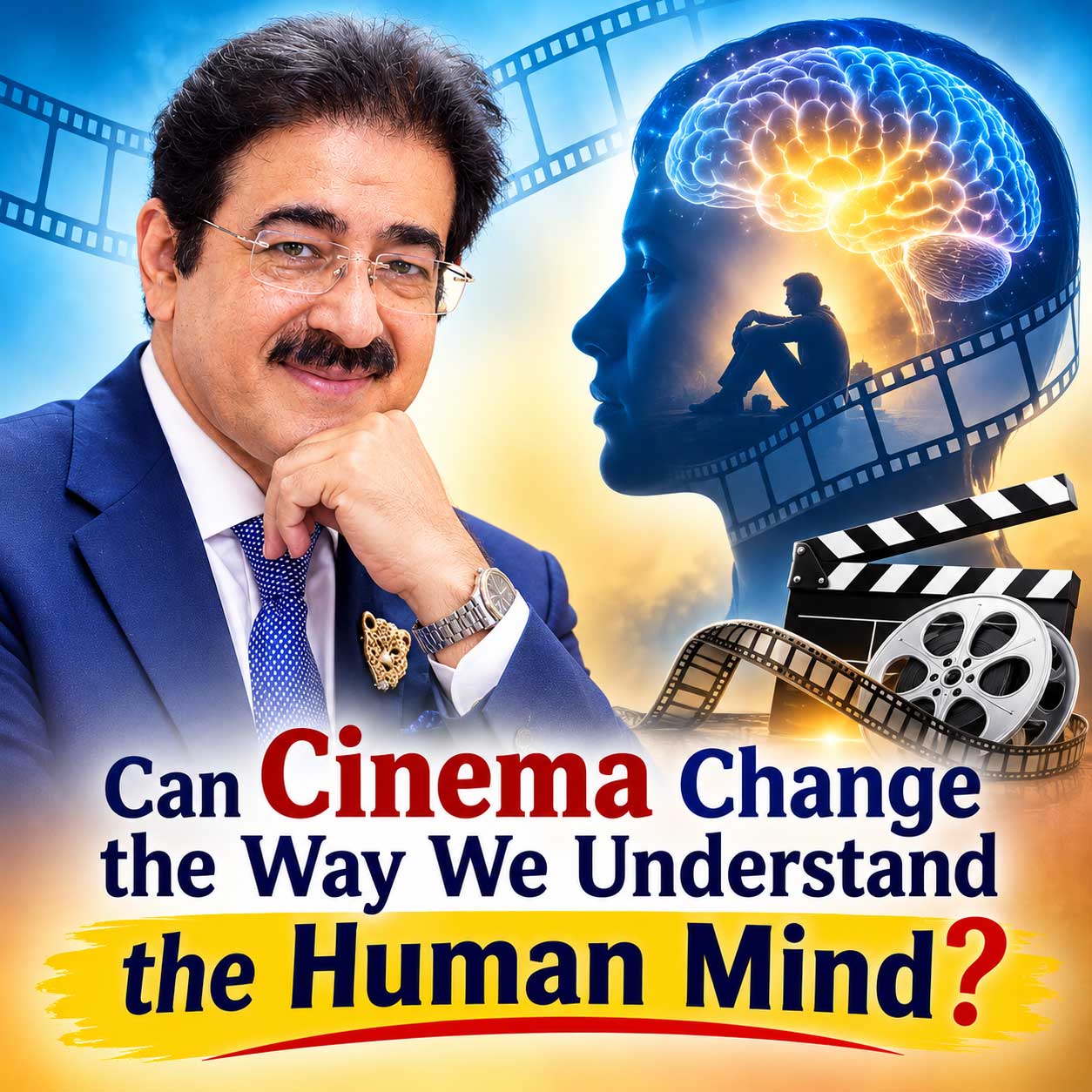
NEW DELHI/NOIDA: Before many people ever meet a psychiatrist, they have already met mental illness on a screen. Depression may first appear as a character arc. Trauma may become a plot device. Suicide, sexuality, gender-based violence, psychosis, grief and recovery may be encountered through a film or series long before the viewer has the language to understand them clinically.
That cultural reality is the starting point for “Cinema & The Mind: Where Stories on Screen Shape How We Feel and Heal,” an initiative conceived and curated by psychiatrist and psychosexual medicine specialist Dr. Aninda Sidhana, National President of the WICCI Mental Health & Psychosocial Wellness Council.
Introduced at the 19th Global Film Festival Noida at Marwah Studios/AAFT, the initiative asks a deceptively difficult question: if stories help societies decide whom to fear, whom to trust, whose pain is believable and what recovery looks like, should mental-health professionals and storytellers be speaking to one another more often?
The ISDRC-originated Cinema & The Mind project is being advanced as an AAFT flagship initiative under the institutional leadership of Dr. Sandeep Marwah, President of the International Chamber of Media and Entertainment Industry (ICMEI) and Founder of AAFT, whose response to the subject was concise: “Need to work on this subject in a big way.”
Not Psychiatry Talking to Itself
The inaugural dialogue was deliberately interdisciplinary. It did not place psychiatry above cinema, nor did it treat filmmakers as recipients of a clinical rulebook. Instead, five voices approached the same cultural question from different vantage points.
Prof. Nimesh G. Desai, who chaired the dialogue, brought the perspective of senior psychiatry. His presence located the discussion beyond diagnostic correctness alone and within a larger public-health and cultural question: what happens when repeated screen representations become part of society’s vocabulary for understanding distress?
Dr. Deepak Raheja, Executive Board member of the WICCI Mental Health & Psychosocial Wellness Council, brought the clinical lens. The value of that perspective lies in the distance between a dramatic character and a real patient: human distress is rarely tidy, recovery is rarely linear, and people cannot be reduced to a diagnosis or a single traumatic event.
Dr. Sugandha Gupta, Senior National Advisor to the Council, brought women’s mental health and the psychosocial lens into the frame. Stories about women are inseparable from the contexts in which women live – relationships, caregiving, sexuality, violence, social expectations, vulnerability, agency and recovery. Her participation broadened the dialogue from illness to the environments in which mental health is shaped.
Filmmaker Vibhu Kashyap, Denim Club creative partner with the Council, represented the creative practitioner’s side of the table. His presence mattered precisely because responsible storytelling cannot become a conversation conducted only by psychiatrists. If the aim is dialogue rather than prescription, the filmmaker’s understanding of character, ambiguity, artistic freedom and audience must remain integral.
Dr. Aninda Sidhana, as initiator, curator and moderator, brought these disciplines together through her work across psychiatry, psychosexual medicine, responsible storytelling and lived-experience-informed advocacy.
“A psychiatrist may understand distress clinically; a filmmaker can make millions feel it. Lived experience reminds both that behind every diagnosis and every character is a human being.” – Dr. Aninda Sidhana
Five Words, Not Five Rules
Cinema & The Mind is organised around five principles: Dignity, Accuracy, Safety, Context and Hope. They are intended as prompts for deeper storytelling, not as a censorship code.
Dignity asks whether a person remains more than a diagnosis. Accuracy asks whether a story relies on myths that can harden into stigma. Safety becomes especially relevant when narratives involve suicide, self-harm or violence. Context asks what social, relational and cultural forces surround distress. Hope does not require a falsely happy ending; it asks whether a story leaves room for agency, help-seeking, connection or the possibility of change.
“Cinema should never become a psychiatry textbook. Creative freedom is fundamental. Responsible storytelling is not about policing stories; it is about creating a space where storytellers, mental-health professionals and people with lived experience can listen to one another.” – Dr. Aninda Sidhana
Dr. Sandeep Marwah: Giving the Conversation a Creative Home
The significance of Dr. Sandeep Marwah’s AAFT leadership lies in the ecosystem around him. ICMEI, AAFT, Marwah Studios and the Global Film Festival Noida place the conversation among film students, writers, directors, actors, media professionals and cultural practitioners – communities that conventional psychiatric conferences rarely reach.
For Cinema & The Mind, that creates the possibility of moving from retrospective criticism of films to earlier, richer conversations about character, psychological complexity and human dignity. It also allows mental health to leave the clinic without pretending that cinema itself is therapy.
Asif A. Kabani and the NGL-SDG Bridge
A second strand of the initiative’s evolution comes from Sidhana’s Next Generation Leadership journey within the ISDRC Geneva SDG-focused ecosystem. During that journey she was mentored by Asif A. Kabani, MBA, Executive Director of the SDG Centre, Geneva, and Founder & CEO of the Next Generation Leaders Program.
The NGL-SDG lens widened the question from representation of mental illness to the larger conditions in which minds live. Mental well-being intersects with dignity, gender equality, education, inclusion and sustainable communities. From that perspective, cinema is not merely entertainment surrounding mental health; it is part of the cultural environment in which societies learn what vulnerability, strength, gender, belonging and help-seeking look like.
That connection is particularly important to Sidhana’s broader ambition of taking mental health beyond traditional clinical spaces. The SDG framework provides a language for linking psychological well-being with social systems, while cinema provides a language capable of reaching people emotionally and at scale.
From Noida to World Cinema
The initiative’s wider creative network also includes World Cinema Partners in the United States, including Raaj Raahi, Vibhu Kashyap and Praver Awal. Their presence opens the possibility of cross-cultural conversations rather than a single formula for “correct” storytelling.
Different societies carry different languages of shame, family, masculinity, womanhood, sexuality, illness, spirituality and recovery. An international dialogue therefore becomes useful not because every culture should tell the same story, but because each can interrogate the assumptions embedded in its own stories.
Why This Matters Beyond Film
A screen portrayal can reinforce the idea that mental illness is synonymous with danger. It can also humanise someone audiences previously feared. A survivor can be reduced to trauma, or portrayed with agency. A character seeking psychiatric help can be mocked, or shown as doing something ordinary and human.
None of this means cinema should become educational messaging. The more interesting proposition behind Cinema & The Mind is that psychological depth can itself be artistically valuable. Characters become richer when they are not stereotypes. Trauma becomes more compelling when it has context. Recovery becomes more believable when it is allowed complexity.
A Platform, Not a Verdict
The first Cinema & The Mind dialogue did not produce a single disciplinary verdict, and that may be its most useful feature. Prof. Nimesh G. Desai brought senior psychiatry. Dr. Deepak Raheja brought clinical experience. Dr. Sugandha Gupta brought women’s mental health and psychosocial understanding. Vibhu Kashyap brought filmmaking and creative practice. Dr. Aninda Sidhana built the bridge between these perspectives.
Dr. Sandeep Marwah and the ICMEI-AAFT ecosystem gave that bridge a creative home. The NGL-SDG journey under the mentorship of Asif A. Kabani added a sustainable-development horizon. World Cinema Partners widened the conversation beyond one geography.
The next chapter is therefore less about deciding whether cinema is “right” or “wrong” about mental health and more about creating places where different kinds of knowledge can meet before a story becomes a stereotype.
Science can help us understand the mind. Cinema can help us feel another person’s world. Lived experience can remind both how much remains unseen.
Cinema shapes culture. Culture shapes minds. Minds shape society. And sometimes, changing the way society sees a human being begins with changing the conversation around the stories it tells.
